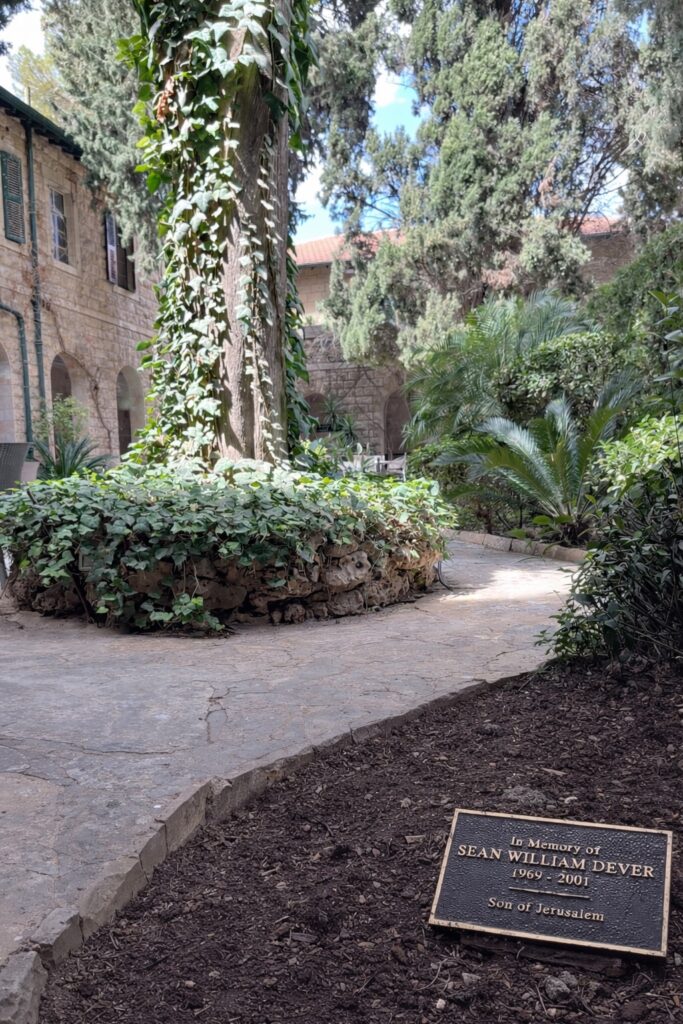
The William F. Albright Institute of Archaeological Research (AIAR) honors the 25th year of the Sean W. Dever Memorial Prize on Sean’s birthday, March 9, 2026. The prize was established in 2001 by Professor William G. Dever and Mrs. Norma Dever, of blessed memory, in memory of their son Sean. This annual award acknowledges the author(s) of the best paper presented at a conference by a PhD candidate that treats a topic in the field of Syro-Palestinian or Biblical Archaeology.
Since the first award was made to Edward F. Maher (PhD, University of Illinois) in 2002, recipients have been PhD students representing twenty different universities in the United States, Israel, the United Kingdom, Germany, Australia, Argentina, and Switzerland. While awardees have contributed to our understanding of the archaeology and history of the Levant from the Early Bronze Age through the Late Antique Period, most have focused on the Late Bronze Age through the Iron Age.
Sean W. Dever Memorial Prize recipients remain active in the field today and hold positions in universities, museums, and other institutions around the world. More than one-third have also been awarded AIAR fellowships to support PhD and postdoctoral research in Jerusalem. Awardees also contribute to the activities of the American Society of Overseas Research (ASOR) as members of the Board of Trustees, session chairs and presenters at ASOR’s annual meeting, and ASOR committee chairs and members.
Edward F. Maher, Senior Lecturer in the Department of Sociology, Criminology, and Anthropology at North Central College, reflects on what the award meant to him: “As the first recipient of the Sean W. Dever Memorial Prize I take great pride in being included in the past quarter century of scholarship as recognized by the selection committee. For me the award validated the theme and quality of my research on the identification of animal sacrifice. It also confirmed that zooarchaeology, alongside other methodological approaches, can make meaningful contributions to our study of ancient culture and associated ritual practices. This early success in my academic development inspired me to incorporate this approach into many of my later projects. I look forward to learning about the work of future recipients as the next 25 years unfold.”
Juan Manuel Tebes, the second recipient of the Sean W. Dever Memorial Prize (2003), writes that “The Sean W. Dever Memorial Prize started it all. When I received it as a young scholar in my mid-20s, I could not have imagined that the Albright Institute would open the way to a life of research and adventures in the Near East.” Juan Manuel Tebes now serves as Director of the Centro de Estudios de Historia del Antiguo Oriente at the Universidad Católica Argentina and Director of the Programa de Estudios de las Sociedades Premodernas, Instituto de Investigaciones de la Facultad de Ciencias Sociales, CONICET.
The prize had special meaning for Laura B. Mazow, Associate Professor of Anthropology at East Carolina University: “Receiving the Sean W. Dever Memorial Prize in 2004 was profoundly meaningful—not only because I had been Professor Dever’s student and a friend of Norma’s, but because that recognition arrived at exactly the moment I needed it. It gave me the confidence that my work mattered, just as I was preparing to defend my dissertation, publish my first article, and step into my first academic position.”
For Jonathan Greer, Visiting Professor of Archaeology in the Department of Anthropology at Grand Valley State University, and 2010 recipient of the Sean W. Dever Memorial Prize, “It was such an honor to receive the Dever Prize and to be associated with the rich legacy of explorations of the Hebrew Bible and ancient Israel in the context of the broader ancient world and the bright future of research projects that expand that scope.”
The Sean W. Dever Memorial Prize Committee looks forward to announcing the next awardee in spring 2027.
Sean W. Dever Prize Awardees
(2002) Edward Maher (PhD candidate in Anthropology, University of Illinois): “Food for the Gods: The Identification of Sacrificial Faunal Assemblages in the Ancient Near East.”
(2003) Juan Manuel Tebes (PhD candidate in History, University of Buenos Aires): “A New Analysis of the Iron Age I ‘Chiefdom’ of Tel Masos (Beersheba Valley).”
(2004) Christine Thompson (PhD candidate in the Department of Classics and the Cotsen Institute of Archaeology, UCLA): “Sealed Silver in Iron Age Cisjordan and the ‘Invention’ of Coinage.”
(2005) Laura B. Mazow (PhD candidate in Near Eastern Studies, University of Arizona): “Competing Material Culture: Philistine Settlement at Tel Miqne-Ekron in the Early Iron Age.”
(2006) John D. M. Green (PhD candidate at the Institute of Archaeology, University College, London): “Anklets and the Social Construction of Gender and Age in the Late Bronze Age and Early Iron Age Southern Levant.”
(2007) Adam Kolman Marshak (PhD candidate in History, Yale University): “The Dated Coins of Herod the Great: Towards a New Chronology.”
(2008) James F. Osborne (PhD candidate in Near Eastern Languages and Civilizations, Harvard University): “The Bench Tomb in Iron Age Judah: Secondary Mortuary Practice and Social Values.”
(2009) Lucy Wadeson (PhD candidate in Classical Archaeology [Art and Archaeology of the Greco-Roman Near East], Oxford University): “Chariots of Fire: Elijah and the Zodiac in Synagogue Floor Mosaics of Late Antique Palestine.”
(2010) Jonathan Greer (PhD candidate in the Department of Classics and Ancient Mediterranean Studies, Pennsylvania State University): “An Israelite MIZRĀQ at Tel Dan?”
(2011) Helen R. Jacobus (PhD candidate in the Department of Religion and Theology, University of Manchester): “4Q318: A Jewish Zodiac Calendar at Qumran.”
(2012) Robert S. Homsher (PhD student in the Institute of Archaeology, University College London): “Mud-Bricks, Construction and the Process of Urbanization in the Middle Bronze Age Levant.”
(2013) Heather Dana Davis Parker (PhD candidate in Northwest Semitics and Hebrew Bible in the Department of Near Eastern Studies, The Johns Hopkins University) and Ashley Fiutko Arico (PhD candidate in the Department of Near Eastern Studies, The Johns Hopkins University): “A Moabite-Inscribed Statue Fragment from Kerak: Possible Egyptian Parallels.”
(2014) Josephine A. Verducci (PhD candidate in the Classics and Archaeology Department in the School of Historical and Philosophical Studies, University of Melbourne): “A Feather in Your Cap: Symbols of Philistine Warrior Status.”
(2015) Jesse Michael Millek (PhD candidate in the Biblical Archaeology Institute and Department of Near Eastern Archaeology, University of Tübingen, Germany): “Sea Peoples, Philistines, and the Destruction of Cities: A Critical Examination of Destruction Layers ‘Caused’ by the ‘Sea Peoples.’”
(2016) Shlomit Bechar (PhD candidate at the Institute of Archaeology, Hebrew University of Jerusalem, Israel): “A Reanalysis of the Black Wheel-Made Ware of the Intermediate Bronze Age.”
(2017) Liat Naeh (PhD candidate, Institute of Archaeology, Hebrew University of Jerusalem): “In Search of Identity: The Contribution of Recent Finds to Our Understanding of Iron Age Ivory Objects in the Material Culture of the Southern Levant.”
(2018) Andrew R. Burlingame (PhD candidate, Northwest Semitic Philology, Department of Near Eastern Languages and Civilizations, University of Chicago): “Line Five of the Amman Citadel Inscription; History of Interpretation and a New Proposal.”
(2019) Assaf Kleiman (PhD candidate, Department of Archaeology and Ancient Near East, Tel Aviv University): “Comments on the Archaeology and History of Tell el-Far’ah North (Biblical Tirzah) in the Iron IIA.”
(2020) Abra Spiciarich (PhD candidate, Nadler Institute of Archaeology, Tel Aviv University): “Birds in Transition: Bird Exploitation during the Late Bronze Age, Iron Age I, and Iron Age II.”
(2021) Avraham Yoskovich (PhD candidate in the Department of General History, University of Haifa): “The Huqoq Mosaic: Re-considering the Biblical Interpretation.”
(2022) Bruno Biermann (PhD candidate in the Institute for Old Testament Studies, University of Bern): “Seals from the Southern Levant and Gender Archaeology: Theoretical and Practical Considerations.”
(2023) Madaline Harris-Schober (dual PhD candidate in Archaeology, Ludwig Maximilians Universität München and the University of Melbourne): “The Mystery of ‘Shrine 22’: A Philistine Ritual Space from the Early Iron Age.”
(2024) Julian Hirsch (PhD candidate in the Institute of Archaeology, Hebrew University of Jerusalem): “Religion, Politics, and Change at Early Bronze Age Megiddo.”
(2025) Christina Olson (PhD candidate in Religion, Baylor University): “Mortuary Landscapes of Iron Age Judah: A Reconsideration of the Relationship between the City and its Dead.”
Sean W. Dever Memorial Prize Committee: Jennie Ebeling and Nathaniel Levtow, co-chairs;
Seymour Gitin and Karen Stern, members; Eric Cline and James Fraser, ex-officio members.